
How to Build an Effective Content Marketing Strategy
Content marketing is more than publishing blog posts or sharing updates on social media. It is a planned approach to creating and distributing useful, relevant content to attract and engage a specific audience. Done well, it can build trust, strengthen brand awareness and support business growth over time.
A clear content marketing strategy helps ensure that every piece of content has a purpose. It connects audience needs with business objectives, guides decisions about what to publish and provides a way to measure progress.
What is a content marketing strategy?
A content marketing strategy is a plan for creating, publishing and managing content to achieve defined goals. It sets out who the content is for, what it should help them do, which formats and channels to use, and how results will be assessed.
Content may include articles, guides, videos, podcasts, newsletters, case studies, webinars and social media posts. The right mix depends on your audience, resources and objectives.
Set clear goals
Start by deciding what the strategy needs to achieve. Broad aims such as “get more visibility” are difficult to measure, so make goals specific and time-bound. For example, you might aim to increase organic website visits, generate more qualified enquiries, improve email sign-ups or support customer retention.
Choose goals that reflect wider business priorities. A content programme designed to build awareness will need different topics and measures from one focused on generating sales enquiries.
Understand your audience
Effective content starts with a useful understanding of the people you want to reach. Consider their needs, questions, priorities and obstacles. Look at customer feedback, sales conversations, support enquiries, website search data and social media discussions for insights.
Audience profiles can help organise what you learn. Focus on practical details, such as:
- What problem is the audience trying to solve?
- What do they already know about the subject?
- What concerns might prevent them from taking action?
- Which sources and formats do they trust?
- What information would help them make a decision?
Avoid relying on assumptions alone. Where possible, test your understanding through research and conversations with customers.
Choose your content themes
Content themes, sometimes called topic pillars, are the main subject areas your brand will cover. They should reflect both audience interests and your organisation’s expertise. A focused set of themes makes it easier to plan consistent content and helps readers understand what they can expect from you.
For instance, a financial planning firm might cover budgeting, pensions, mortgages and long-term saving. Each theme can support a range of content, from introductory explanations to detailed guides and customer stories.
When choosing topics, consider search behaviour as well as the questions your team hears directly. Keyword research can reveal what people are looking for, but content should answer real questions rather than simply repeat search terms.
Map content to the customer journey
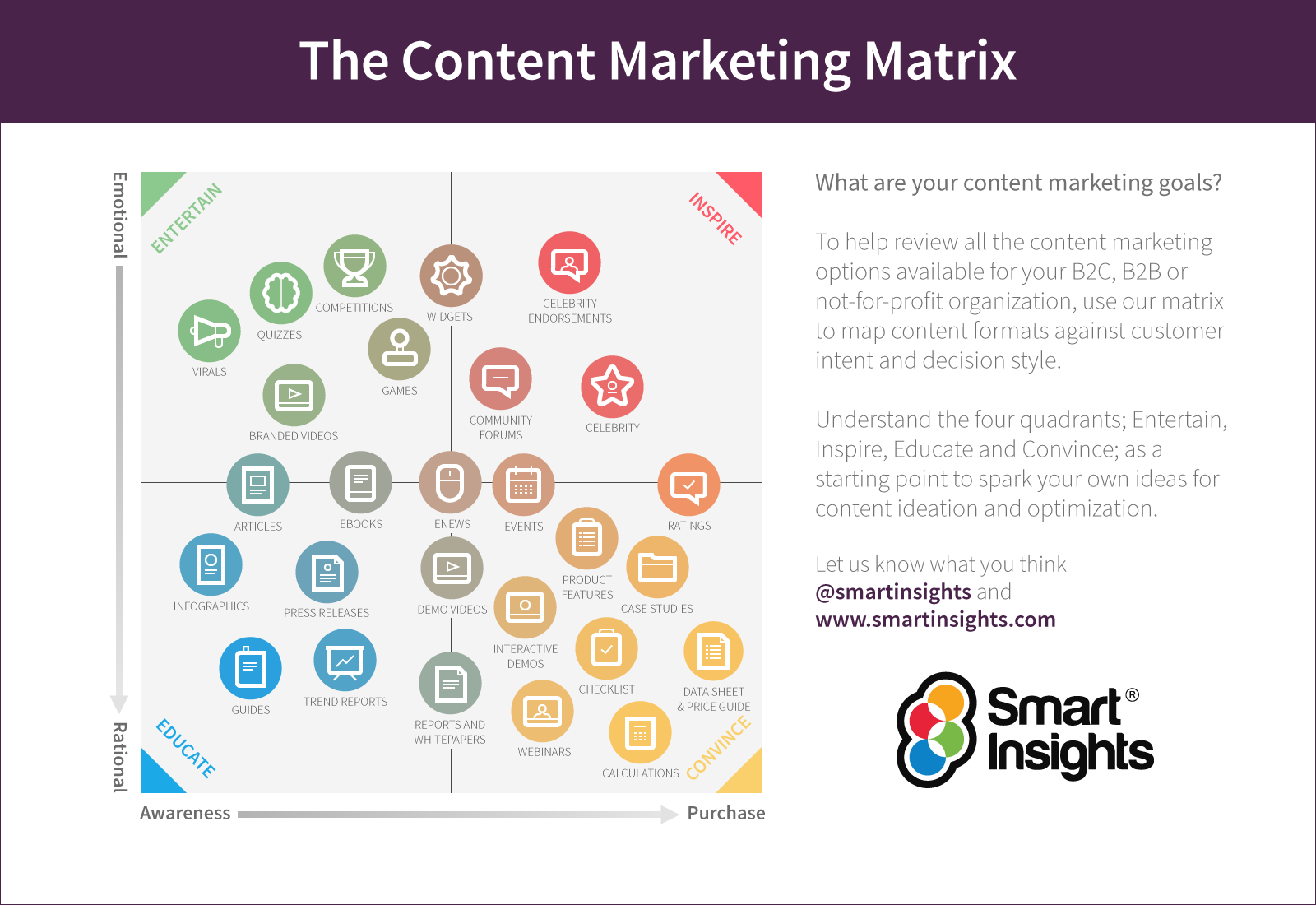
People need different information depending on how familiar they are with a problem or solution. A useful strategy provides content for each stage of the customer journey:
- Awareness: Introduce a problem, explain a topic or help readers explore an opportunity.
- Consideration: Compare approaches, explain how a service works or address common concerns.
- Decision: Provide evidence and practical details, such as case studies, demonstrations, pricing information or FAQs.
- Retention: Help existing customers get more value, solve problems and discover relevant services.
Not every organisation needs the same journey. Use what you know about your customers to identify the information they need at each stage.
Select the right formats and channels
Choose formats based on the subject, audience preferences and the resources available. A complex process may be easier to explain in a video or step-by-step guide, while a short update might work well in an email or social post.
Decide where each piece of content will be published and how it will reach its audience. Your website may be the central home for evergreen resources, supported by newsletters, social media, partnerships or other relevant channels. It is usually more effective to use a few suitable channels consistently than to spread effort across every platform.
Create a realistic editorial plan
An editorial calendar turns strategy into action. It can record the topic, target audience, format, channel, owner, publication date and intended call to action for each piece of content.
Plan at a pace your team can sustain. Consistency matters, but publishing frequently is not useful if quality suffers or the schedule cannot be maintained. Allow time for research, writing, editing, design, approval and promotion. It is also sensible to leave room for timely topics and unexpected changes.
Create useful, trustworthy content
Strong content gives the audience clear value. It answers a question, solves a problem, explains a decision or offers a well-supported perspective. Make it easy to read by using clear headings, concise paragraphs and straightforward language.
Check facts carefully and use reliable sources where appropriate. Make sure claims are accurate, explain specialist terms and keep information current. If the subject changes over time, schedule reviews so that older material does not become misleading or out of date.
Every piece should also have a clear next step. This might be reading a related guide, subscribing to a newsletter, requesting information or contacting your organisation. The call to action should feel relevant to the content and the reader’s stage in the journey.
Distribute and repurpose content
Publishing is only one part of content marketing. Give each piece a distribution plan so that the intended audience has a chance to find it. This could include sharing it through an email newsletter, adapting key points for social media or linking to it from relevant pages on your website.
Repurposing can help extend the value of useful material. A detailed report might become a short article, a presentation, a series of social posts or a webinar. Adapt the content to suit each format rather than copying it unchanged across every channel.
Measure what matters
Measurement shows whether your strategy is making progress and where improvements may be needed. Choose metrics that relate to your goals, rather than tracking numbers simply because they are easy to collect.
- Awareness: relevant reach, search impressions and growth in direct or organic visits.
- Engagement: time spent with content, meaningful interactions, returning visitors and email engagement.
- Consideration: downloads, enquiries, event registrations and visits to key service pages.
- Business impact: qualified leads, conversions, customer retention or assisted sales.
Use analytics alongside qualitative feedback. A page with modest traffic may still be valuable if it helps the right people make a decision. Review performance regularly and look for patterns by topic, format and channel.
Improve the strategy over time
A content marketing strategy should be reviewed and refined as you learn more about your audience and results. Update content that is performing well, improve pages that are difficult to find, and reconsider topics or formats that are not meeting their purpose.
Regular reviews can also reveal gaps. You may find that you publish plenty of introductory material but offer little guidance for people comparing options, or that useful resources are not being promoted effectively. Small, evidence-led changes can make the overall programme more effective.
Common content marketing mistakes
- Publishing without clear goals or a defined audience.
- Focusing on quantity instead of usefulness and quality.
- Writing only about the organisation rather than the audience’s needs.
- Choosing channels without considering where the audience spends time.
- Failing to promote or update published content.
- Measuring activity without connecting it to meaningful outcomes.
Conclusion
An effective content marketing strategy brings together clear goals, audience insight, useful content, thoughtful distribution and regular measurement. It does not need to be complicated, but it does need to be practical and consistent. Start with the needs of your audience, focus on the outcomes that matter to your organisation and use what you learn to improve the plan over time.
6 Key Benefits of a Content Marketing Strategy
- Builds brand awareness.
- Attracts relevant audiences.
- Creates trust and credibility.
- Supports search visibility.
- Generates qualified leads.
- Delivers lasting value.
Five Key Challenges of a Content Marketing Strategy
- Takes time to build results.
- Requires consistent effort.
- Can be costly to produce quality content.
- ROI can be difficult to measure.
- Crowded topics make it harder to stand out.
Builds brand awareness.
A well-planned content marketing strategy helps build brand awareness by putting useful, relevant content in front of the right people. Articles, videos, social media posts and email newsletters can introduce your business to potential customers and give them a reason to remember it. By publishing consistently and sharing expertise on topics your audience cares about, your brand can become more familiar and trusted over time.
Attracts relevant audiences.
A well-planned content marketing strategy attracts relevant audiences by creating useful material around the questions, interests and challenges of the people a business wants to reach. By choosing appropriate topics, keywords and channels, businesses can connect with potential customers who are already looking for information or solutions related to their products and services. This helps bring more interested visitors to a website and encourages stronger, more meaningful engagement.
Creates trust and credibility.
A well-planned content marketing strategy helps build trust and credibility by consistently providing useful, accurate information that addresses your audience’s needs. When people find clear answers, practical guidance and honest insights from your business, they are more likely to view it as knowledgeable and dependable. Over time, this steady value can strengthen relationships and make customers more confident in choosing your products or services.
Supports search visibility.
A well-planned content marketing strategy can improve search visibility by publishing useful, relevant content that answers the questions your audience is searching for. By targeting appropriate keywords, organising topics clearly and updating existing pages, your website can become easier for search engines to understand and more valuable to visitors. Over time, this may help attract more qualified organic traffic and strengthen your presence in search results.
Generates qualified leads.
A well-planned content marketing strategy can generate qualified leads by attracting people who are already interested in the problems your products or services solve. Helpful guides, case studies and newsletters give potential customers valuable information while encouraging them to take the next step, such as downloading a resource or making an enquiry. This helps businesses identify prospects with genuine interest and focus their sales efforts more effectively.
Delivers lasting value.
One of the key advantages of a content marketing strategy is that it can deliver lasting value. Unlike a short-lived advert, a useful article, guide or video can continue attracting visitors and answering questions long after it has been published. With regular updates and effective promotion, evergreen content can build trust, support search visibility and generate leads over time, making it a valuable long-term investment.
Takes time to build results.
One potential drawback of a content marketing strategy is that it takes time to build results. Creating useful, high-quality content and earning an audience’s trust rarely leads to immediate traffic, enquiries or sales. Search visibility, engagement and brand recognition tend to grow gradually, so businesses need to publish consistently, promote their content and review performance over time. This long-term commitment can be challenging when quick returns are expected or resources are limited.
Requires consistent effort.
A content marketing strategy requires consistent effort to deliver results. Creating useful content, keeping it up to date and promoting it across the right channels all take time and resources. Results may also take months to become clear, so businesses need patience and a sustainable publishing plan. Without regular attention, content can quickly become outdated, audience engagement may decline and the strategy is less likely to achieve its goals.
Can be costly to produce quality content.
One potential drawback of a content marketing strategy is the cost of producing high-quality content. Research, writing, editing, design and promotion all require time and expertise, while videos, podcasts and other specialist formats may need additional equipment or professional support. For businesses with limited budgets or small teams, these costs can make it difficult to publish consistently and maintain the standard needed to engage an audience.
ROI can be difficult to measure.
One drawback of a content marketing strategy is that its return on investment (ROI) can be difficult to measure. Content may influence a customer over several weeks or months, with people viewing articles, social posts and emails before taking action. This makes it challenging to link a specific piece of content directly to a sale or enquiry. While metrics such as website traffic, engagement and conversions can offer useful insights, they do not always capture the full value of content, including increased trust and brand awareness.
Crowded topics make it harder to stand out.
When many brands are covering the same topics, it can be difficult for your content to catch the audience’s attention. Popular subjects are often saturated with articles, videos and social posts, making it harder to rank in search results or offer something readers have not already seen. To stand out, find a distinctive angle, draw on genuine expertise or original insights, and focus on specific audience needs rather than repeating familiar advice.